

The Estrangement “Epidemic”: Schema Therapy and the Challenges – and Opportunities – of Estrangement
This presentation explores the idea that – seen through the lens of schema therapy – estrangement can reflect challenges for some patients and healthy limit setting for certain others.
In a societal and psychological sense, estrangement is a state that greatly impacts people’s lives. The sheer magnitude of estrangement in today’s society is overwhelming: over one in four Americans reported being estranged from a relative in a recent nationwide survey (Pillemer, 2020). This statistic may hold true outside the US as well (Blake, 2015). The challenges that estrangement presents to our patients are profound: for example, deprivation and isolation created by cut offs with family members. This can have lasting impact on our patients’ lives and needs to be addressed in our work with them.
Often estrangement is explored in terms of how it happens and the impact that it has on people who are estranged, holding out the hope of reconciliation (see, for example, Coleman, 2020 and Pillemer, 2020). Seen through the lens of schema therapy, a more nuanced understanding of estrangement surfaces in which estrangement can at times reflect healthy limit setting – in other words, the opportunities that estrangement can present. The specific schemas and modes involved – both in patients and those of other important people in their lives – don’t always point to estrangement as problematic.
In this presentation we examine conditions in which estrangement can lead to challenging schema activation on the one hand and on the other can act as a protective factor. In the first case, we look at possible schema and mode combinations that result in the need to attempt to bridge estrangement to allow for schema healing and explain treatment pathways to heal estrangement within the client (using schema therapy) and with clients and estranged family members (using schema therapy and attachment-based family therapy). In the second instance, we look at how estrangement can be approached in an adaptive way where reconciliation needs to be examined carefully as to when – and if – it can take place.
Learning Objectives
Upon completion of this presentation, participants will be able to:
· Describe possible schema and mode combinations that result in the need to attempt to bridge estrangement to allow for schema healing
· Describe possible schema and mode combinations that result in the need to support estrangement to allow for schema healing
· Differentiate between the need for full and partial estrangement (limit setting) with patients and their family and friends.
· Explain treatment pathways to heal estrangement within the client (using schema therapy) and with clients and estranged family members (using schema therapy and attachment-based family therapy).
Speakers
 John GasiewskiClick for more
John Gasiewski is a psychotherapist in private practice in New Jersey, New York and Connecticut and an International Society of Schema Therapy (ISST)-approved supervisor. His areas of focus include treating narcissism, the impact of narcissism on others, and estrangement.
John became interested in Schema Therapy as an integrated model of addressing core unmet needs in general and as a way to address narcissism in specific while training with and being supervised by Wendy Behary LCSW starting in the mid-2000s. His passion for Schema Therapy has only continued to grow over the years, with presentations on Anger Modes internationally and regionally in the New York Metro area, and an interest in and publication on estrangement as a means of schema healing. His other interests include limited re-parenting and play via imagery, and working with modes to integrate them in patients in healthier ways. He has also served as the ISST Election Committee Chair twice, spent several years as the ISST US/Canada Regional Certification Coordinator and participates as a committee member and co-trainer on the ISST’s Supervisory Skills Development Committee.
For more information on him, please visit
https://drjohngtherapy.com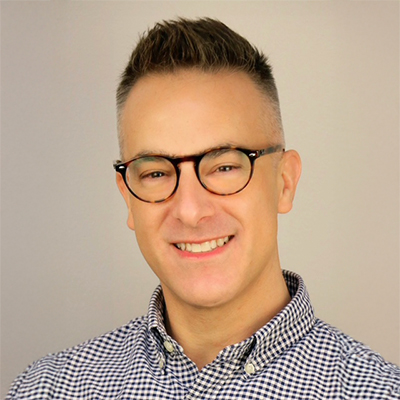 Paul DelGrossoClick for more
Paul DelGrosso is a psychotherapist in private practice in Washington, DC and a trainer and supervisor with the Schema Therapy Institute of DC.
Paul first encountered schema therapy when working as therapist with active-duty service members at the Pentagon starting in 2010. He became interested in patients with PTSD who did not respond well to traditional therapeutic models for trauma. He began researching contributing factors, discovered the role personality plays in response to treatment, encountered Jeff Young’s work with schema-modes, and quickly began training in schema therapy with Wendy Behary. The results have been transformative in his practice treating trauma and many other conditions.
Paul’s interest in addressing unmet needs in childhood includes applying schema therapy to work with families. He met Dr. Bart Rubin in 2018 at the ISST conference in Amsterdam. Bart discussed his conversations with Jeff Young about how learning attachment-based family therapy (ABFT) helps schema therapists improve emotionally deepening techniques. Paul began training in ABFT and, seeing the ways this model integrates well with schema therapy, eventually became certified in ABFT. Helping individuals and families address attachment ruptures continues to be a strong area of focus in Paul’s practice.

